In Feng Shui, the kitchen is one of the most important areas of the home because it represents nourishment, family health, daily energy and prosperity. When people think about improving their feng shui home, they often focus on the main entrance, bedroom or living room, but the kitchen also has a powerful influence on the way Qi moves through the household. A clean, bright and balanced kitchen can support harmony, warmth and stability, while a poorly arranged kitchen may create stress, clutter or energetic conflict.
The kitchen belongs strongly to the Fire element because of the stove, oven and cooking activity. Fire represents warmth, transformation, action and wealth potential. In traditional Feng Shui, the stove is especially important because it transforms raw ingredients into food that supports the family. For this reason, the stove should be treated with respect. Keep it clean, functional and easy to use. If the stove is broken, dirty or surrounded by clutter, it may symbolically weaken the energy of nourishment and opportunity.
Why Fire and Water Balance Matters
One of the most common feng shui kitchen concerns is the relationship between Fire and Water. Fire is represented by the stove, oven and heat. Water is represented by the sink, fridge, dishwasher and taps. Because Fire and Water are opposite elements, their placement should be considered carefully. When the stove is directly opposite the sink or fridge, it may create a clash of energy. In daily life, this can be felt as tension, disagreement, pressure or a lack of emotional balance within the home.
Not every home can be renovated, so Feng Shui solutions should also be practical. If your stove and sink are too close or directly opposite each other, you can soften the clash by keeping the area clean and introducing the Wood element. Wood acts as a bridge because Water supports Wood, and Wood supports Fire. Simple additions such as a wooden chopping board, timber tray, small healthy plant, green colour tone or natural basket can help soften the feeling between the two energies.
Stove Position and Family Prosperity
The stove is often described as the heart of the kitchen. Ideally, the person cooking should feel supported and should not be easily surprised from behind. If your stove faces a wall and your back is toward the kitchen entrance, the cook may feel less comfortable or less in control. A simple improvement is to use a reflective splashback, shiny kettle or small mirror-like surface in a safe position so the cook can sense movement behind them.
It is also better to avoid placing the stove directly under a heavy beam, as this may create a feeling of pressure. If the layout cannot be changed, use good lighting, a clean ceiling area and a calm colour scheme to reduce the heaviness. The stove should not be overcrowded with too many bottles, pots, pans or unused items. In Feng Shui, clutter blocks Qi. A clear stove area helps the energy of the kitchen feel active, fresh and prosperous.
Keep the Kitchen Bright, Clean and Fresh
Good lighting is important for every feng shui home, and the kitchen is no exception. A dark kitchen can feel heavy and stagnant, while a bright kitchen feels lively and welcoming. Natural light is best, but warm, practical lighting can also improve the atmosphere. Ventilation is equally important because cooking creates heat, steam, smoke and smells. Open windows when possible, use an exhaust fan and remove rubbish or old food quickly. Fresh air supports fresh Qi.
Cleanliness is one of the easiest kitchen feng shui tips to apply. Check expired food, clean the fridge, organise cupboards and keep benchtops as clear as possible. Broken appliances should be repaired or removed. This does not mean the kitchen must look empty; it should still feel warm and lived in. The goal is to make the space functional, calm and easy to use.
Best Colours and Materials for Kitchen Feng Shui
Because the kitchen already has strong Fire energy, it is usually best not to overuse strong red colours. Too much red may make the kitchen feel intense or restless. Soft neutral colours, warm whites, gentle earth tones, light greens and natural timber are often more balanced choices. Earth colours such as beige, cream and soft yellow can support stability. Green introduces the Wood element, which helps harmonise Fire and Water. Deep blue and black represent Water, so they should be used carefully, especially near the stove.
Open-Plan Kitchens and Modern Homes
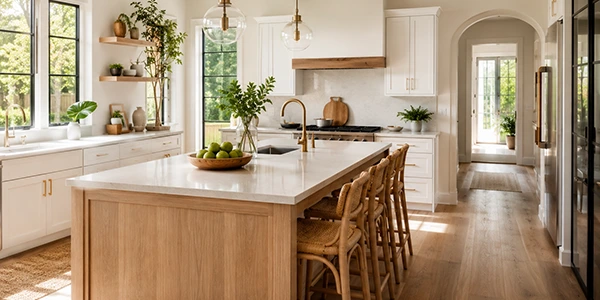
Many Australian homes and apartments now have open-plan kitchens connected to the dining or living area. This can be positive because it allows family members to interact while cooking. However, because the kitchen is visible from other areas, it should be kept visually calm. Dirty dishes, overflowing bins or cluttered benches can affect the energy of the whole living space. Use good storage, define the cooking and dining areas clearly, and keep the kitchen island tidy.
Final Thoughts
A balanced kitchen supports more than cooking. It supports family health, daily rhythm, emotional comfort and prosperity. By respecting the stove, balancing Fire and Water, improving light and ventilation, and reducing clutter, you can create a kitchen that feels warm, practical and harmonious. Good Feng Shui is not about superstition or decoration only; it is about how a space supports the people living in it. For personalised advice about your kitchen, home layout or feng shui home, you may consult Feng Shui Consultant Master Philip Yuen.