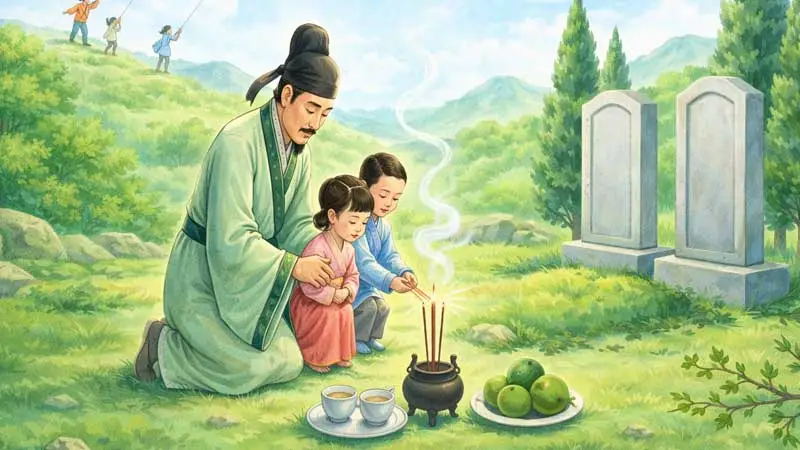
Qing Ming Festival, also known as Tomb Sweeping Day, is an important traditional Chinese festival dedicated to remembering and honouring ancestors. For many Chinese families in Australia, Qing Ming remains a meaningful time to visit graves, tidy memorial spaces, offer prayers and express gratitude to previous generations. Even for those whose family graves are overseas, Qing Ming can still be observed through remembrance at home with sincerity and respect.
Qing Ming usually falls in early April each year and is not a long festival in the same way as Chinese New Year. Traditionally, the observance centres around a particular day, although many families may visit before or after that date depending on work, travel and family arrangements. In practice, the spirit of Qing Ming is less about the exact length and more about the act of remembrance, respect and care.
From a traditional Chinese Feng Shui Australia perspective, Qing Ming is closely connected with family harmony, gratitude and the relationship between the living and their ancestors. Feng Shui teaches that respect for ancestors is not only a cultural value but also part of maintaining balance and good family energy. A grave or memorial place that is clean, cared for and approached with sincerity reflects order, respect and continuity between generations.
In Australia, families may adapt Qing Ming to local conditions. Some visit cemeteries and memorial parks, while others keep a home altar, prepare simple offerings, light incense where appropriate, or spend time quietly remembering family members who have passed on. The most important principle is not extravagance, but a respectful heart and a peaceful mindset.
10 Qing Ming and Feng Shui Points to Remember
- Clean the grave or memorial area — Tidying the resting place symbolises respect, care and the removal of stagnant energy.
- Approach with sincerity — Feng Shui values intention. A calm and respectful heart is more important than elaborate display.
- Keep the surroundings orderly — Neat surroundings reflect harmony and dignity for both ancestors and descendants.
- Offer fresh flowers or simple offerings — Fresh, clean offerings symbolise gratitude and remembrance.
- Avoid noisy or disrespectful behaviour — Qing Ming is a solemn family observance, not a casual outing.
- Pray or reflect quietly — A few sincere words of thanks and remembrance carry deep meaning.
- Maintain family unity — Visiting together helps strengthen family bonds and shared roots.
- Remember ancestors overseas if you cannot travel — A home altar, candle, flowers or quiet prayer can still honour them meaningfully.
- Do not focus only on superstition — Qing Ming is also about gratitude, family values and continuity between generations.
- Carry the spirit home — Respect for ancestors should inspire harmony, kindness and responsibility in daily family life.
Qing Ming in Australia is therefore both a cultural tradition and a meaningful expression of Feng Shui values. By remembering our ancestors, caring for their resting places and approaching the day with gratitude, we help nurture harmony within the family and create a respectful connection between past and present.