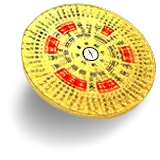
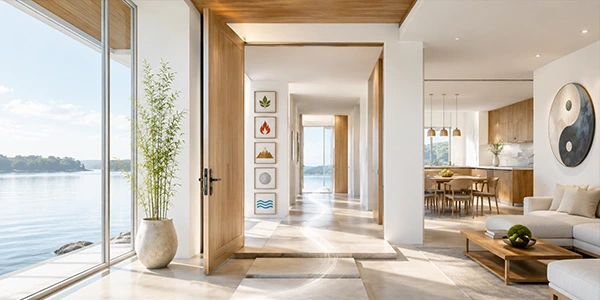
Creating better Feng Shui at home begins with understanding how your surroundings influence the way you feel, move, rest and live. Feng Shui (风水) is a traditional Chinese practice developed over thousands of years to study the relationship between people, their environment and the movement of Qi flow.
The aim of a well-balanced Feng Shui home is not simply to decorate rooms according to fixed rules. It is to create an environment where energy can enter, circulate and settle naturally while supporting comfort, health, relationships, productivity and overall wellbeing.
At its core, home Feng Shui is based on the idea that everything around us influences the atmosphere of a space. Ancient Feng Shui practitioners observed natural patterns such as wind direction, water movement, sunlight, mountains and surrounding land formations. These observations gradually developed into principles for arranging homes and buildings in greater harmony with their environment.
A dark, cluttered or poorly organised home can feel stagnant and uncomfortable, while a bright, clean and thoughtfully arranged home often feels calmer and more supportive. This is why many home Feng Shui key principles focus on practical matters such as furniture placement, natural light, airflow, clutter, entrances and the balance of the Five Elements.
The following principles provide a practical foundation for creating better Feng Shui at home.
Contents: Key Principles for Better Feng Shui at Home
- The Commanding Position
- A Clear and Inviting Entrance
- Decluttering and Qi Flow
- Balancing the Five Elements
- Air and Natural Light
- Bedroom Feng Shui
- Kitchen Feng Shui
- Bathroom Feng Shui
- Creating Harmony Throughout the Home
1. The Commanding Position
One of the most important principles in home Feng Shui is the commanding position. It is commonly applied to three important areas: the bed, desk and stove.
The general principle is that you should ideally be able to see the entrance to the room while using these important areas, without being positioned directly in line with the doorway.
This arrangement creates greater awareness of the surrounding space and symbolically provides support, security and control.
Bed Position
The bed is one of the most important pieces of furniture in a Feng Shui home because people spend many hours resting there.
Ideally, you should be able to see the bedroom door while lying in bed without having the bed directly aligned with the doorway. A solid wall behind the headboard can also provide a greater sense of support and stability.
Desk Position
Your desk can represent career, work, concentration and decision-making. Positioning it so that you can see the entrance may create a stronger sense of awareness and control while working.
If possible, avoid sitting with your back directly towards the main entrance for long periods.
Stove Position
In traditional Feng Shui, the stove is associated with nourishment, household resources and prosperity.
Where practical, the person cooking should have some awareness of the entrance rather than feeling completely exposed from behind. If the kitchen layout cannot be changed, some Feng Shui approaches use a reflective surface to increase visual awareness.
2. Create a Clear and Inviting Entrance
The main entrance is one of the most important areas in home Feng Shui. It is traditionally known as the mouth of Qi because it is considered the primary location through which energy enters the property.
A dark, damaged or cluttered entrance may restrict movement and make the home feel less welcoming.
- Keep the entrance clean and uncluttered.
- Remove broken objects and unnecessary items.
- Ensure entrance lighting works properly.
- Allow natural light into the area where possible.
- Keep the front door clean and in good condition.
- Use healthy plants or simple artwork where appropriate.
- Make sure the house number is visible.
A welcoming entrance helps establish smoother Qi flow between the outside environment and the interior of the home.
3. Decluttering and Improving Qi Flow
Decluttering is one of the simplest ways to improve Qi flow throughout a home.
Traditional Feng Shui associates excessive clutter with stagnant Qi. From a practical perspective, clutter can also restrict movement, increase visual stress and make rooms more difficult to maintain.
The objective is not to remove every possession. Instead, keep items that are useful, meaningful or appropriate while removing things that unnecessarily block space.
- Repair or remove broken furniture.
- Dispose of electronics that no longer work.
- Donate items that are no longer used.
- Keep hallways and doorways open.
- Avoid filling every corner with storage.
- Organise cupboards and storage areas regularly.
Clear pathways allow people to move more comfortably and, in Feng Shui terms, encourage smoother Qi flow from one area of the home to another.
4. Balance the Five Elements
The Five Elements are an important part of traditional Chinese Feng Shui. They are Wood, Fire, Earth, Metal and Water.
Each element represents different qualities. The goal is not necessarily to use equal amounts of every element, but to create a balanced environment appropriate for each room.
Wood – Growth and Vitality
Wood is associated with development, growth and vitality.
- Healthy indoor plants
- Wooden furniture
- Natural timber finishes
- Green and certain blue tones
Fire – Warmth and Activity
Fire represents warmth, activity, recognition and transformation.
- Natural sunlight
- Lighting
- Candles where safe
- Red and warm accent colours
Earth – Stability and Grounding
Earth represents stability, nourishment and grounding.
- Ceramics
- Stone
- Natural materials
- Beige, yellow and earthy colours
Metal – Clarity and Structure
Metal is associated with organisation, precision and clarity.
- Metal accessories
- Round shapes
- White
- Grey
- Metallic finishes
Water – Flow and Opportunity
Water is traditionally associated with movement, wisdom, opportunity and wealth.
- Water features where appropriate
- Mirrors
- Black and darker tones
- Flowing or irregular shapes
Physical water features should always remain clean and properly maintained. Stagnant or leaking water is generally considered undesirable because it represents disrupted or weakened Qi flow.
5. Air and Light: Supporting Healthy Qi
Fresh air and natural light are two of the easiest ways to improve the atmosphere of a Feng Shui home.
A property that remains dark, closed and poorly ventilated can feel heavy and stagnant. Regular ventilation allows stale air to leave while daylight helps rooms feel more active and welcoming.
- Open windows regularly when weather permits.
- Open curtains and blinds during the day.
- Keep windows clean.
- Use warm lighting in darker areas.
- Replace broken or flickering lights.
- Avoid leaving important rooms permanently dark.
Healthy plants can also introduce the Wood element and strengthen the visual connection between the home and nature.
Good airflow and natural light support a more comfortable environment and encourage healthier Qi flow.
6. Bedroom Feng Shui for Rest and Harmony
The bedroom is one of the most important areas in home Feng Shui because it directly affects sleep, privacy, relationships and emotional wellbeing.
- Place the bed in a commanding position where possible.
- Use a stable headboard.
- Keep unnecessary clutter away from the bed.
- Choose softer and calming colours.
- Reduce unnecessary electronics around the sleeping area.
- Keep the room clean and ventilated.
- Avoid overly harsh lighting at night.
Mirrors in the Bedroom
Traditional Feng Shui often recommends caution with mirrors directly facing the bed because reflection creates visual activity in a space intended for rest.
If a mirror causes discomfort or strongly reflects the bed, repositioning it may create a calmer sleeping environment.
The objective is to create a bedroom that feels quiet, stable and supportive.
7. Kitchen Feng Shui and Household Prosperity
In a traditional Feng Shui home, the kitchen represents nourishment, health and household resources.
The stove is particularly important because it is connected with preparing food and supporting the people living in the property.
- Keep the stove clean and functional.
- Use all burners periodically where practical.
- Keep kitchen surfaces organised.
- Repair leaking taps.
- Maintain good ventilation.
- Remove expired food and unnecessary clutter.
Fire and Water in the Kitchen
The stove represents Fire while the sink represents Water. Traditional Feng Shui generally prefers these two strong elements not to be placed in direct conflict where practical alternatives exist.
However, many existing homes cannot easily change their kitchen layout. Good Feng Shui should work with the actual property rather than create unnecessary worry about a single feature.
Keeping the kitchen clean, active and well maintained is often more important than focusing on one isolated rule.
8. Bathroom Feng Shui and Water Energy
Bathrooms contain strong Water energy because they include showers, baths, basins, toilets and drainage.
Good bathroom Feng Shui therefore focuses heavily on cleanliness, ventilation and maintenance.
- Keep bathrooms clean and dry.
- Maintain good ventilation.
- Repair leaking taps and pipes quickly.
- Keep drains functioning properly.
- Close the toilet lid when not in use.
- Keep the bathroom door closed where practical.
- Avoid allowing mould or excessive dampness to develop.
Earth tones, ceramics and stone materials can also help create a more visually grounded environment.
9. Create Harmony Throughout the Whole Home
The most important home Feng Shui key principles should work together rather than treating each room as a completely separate problem.
Consider how people and Qi flow move from the entrance into the living room, kitchen, bedrooms and outdoor areas.
Furniture should provide sufficient space for comfortable movement. Rooms should also support their intended function. Active areas may be brighter and more energetic, while bedrooms and relaxation areas should feel calmer.
Good Feng Shui at home is about creating an environment that works naturally with everyday living rather than applying rigid rules without considering the property itself.
Simple Home Feng Shui Checklist
- Keep the main entrance clean, bright and welcoming.
- Use the commanding position for important furniture where possible.
- Remove unnecessary clutter and broken objects.
- Keep hallways and doorways clear.
- Balance the Five Elements appropriately.
- Allow fresh air and natural sunlight into the home.
- Create a calm and supportive bedroom.
- Keep the kitchen clean and functional.
- Repair leaking taps and blocked drains.
- Keep bathrooms ventilated.
- Maintain healthy plants where appropriate.
- Regularly maintain the property rather than allowing problems to accumulate.
Final Thoughts
The most effective home Feng Shui key principles are often simple. A well-balanced home should feel calm, comfortable, organised and alive.
Good Feng Shui does not necessarily require expensive decorations or large numbers of traditional objects. In many homes, the strongest improvements begin with clearing clutter, repairing damaged items, increasing natural light, improving ventilation and arranging furniture more thoughtfully.
By supporting healthy Qi flow and applying traditional Feng Shui principles appropriately, you can create an environment that feels more supportive of rest, relationships, work and daily wellbeing.
Every property is different. For personalised advice about your property layout, bedroom, kitchen, entrance, Five Elements or home Feng Shui, you may consult Feng Shui Consultant Master Philip Yuen.